
Introduction
When venturing into the medical field, specifically as an EKG technician, the choice between free vs paid EKG training courses can be a defining moment. With so many options available, it can be overwhelming to determine which route is best for you. The medical field is constantly evolving, and keeping up with the necessary training is crucial. EKG technicians play a vital role in diagnosing heart conditions, and their training must be comprehensive and reliable. This is where the debate between free and paid courses comes into play.
Free courses often attract individuals looking to save money or those who are unsure about committing to a career in EKG technology. However, while these courses may offer valuable information, they might not always provide the depth or quality found in paid programs. On the other hand, paid courses often come with a price tag but can offer benefits that lead to better job prospects and a deeper understanding of EKG readings.
In this article, we’ll explore the pros and cons of both free and paid EKG training courses, helping you make an informed decision about your educational path. We’ll delve into the content, structure, and potential outcomes of each option, so you can choose the course that aligns best with your personal and professional goals.
Understanding EKG Training
Before diving into the differences between free and paid EKG training courses, it’s essential to understand what EKG training entails. EKG training programs teach students how to perform electrocardiograms, which are vital for diagnosing various heart conditions. Students learn about the anatomy of the heart, how to read EKG strips, and the significance of different waveforms. The training also typically covers patient care, safety protocols, and the use of EKG machines.
In essence, EKG training is a blend of theoretical knowledge and hands-on practice. Understanding how to interpret EKG results is crucial for any technician, as incorrect readings can lead to misdiagnosis and inadequate patient care. Hence, the quality of the training you receive is paramount. Whether you choose a free or paid course, ensure that it provides a solid foundation in both the theory and practical skills needed in this role.
Pros and Cons of Free EKG Training Courses
Free EKG training courses can be appealing, especially for those just starting their journey. They offer an opportunity to gain fundamental knowledge without the financial burden. However, this comes with its own set of advantages and disadvantages.
Advantages of Free Courses
One of the most significant benefits of free EKG training courses is, of course, the cost. You won’t have to spend a dime, which is perfect if you’re just exploring your interest in EKG technology. Many free courses are offered online, making them accessible from anywhere. They also provide flexibility, allowing you to learn at your own pace.
Additionally, some free courses might be affiliated with reputable institutions, providing quality content that can serve as a solid introduction to EKG training.
Disadvantages of Free Courses
Despite the advantages, free EKG training courses often lack depth. They may cover only the basics, leaving out essential topics that a technician needs to know. Furthermore, free courses usually lack certification, which can be a significant drawback when applying for jobs. Employers often prefer candidates with recognized certifications from accredited programs. Additionally, the quality of the materials can vary significantly, and you might not receive any hands-on training.
Pros and Cons of Paid EKG Training Courses
On the flip side, paid EKG training courses come with their own set of pros and cons. While they require an investment, they often provide comprehensive training that can lead to better job prospects.
Advantages of Paid Courses
Paid EKG training courses typically offer a more in-depth curriculum. They often cover advanced topics and provide hands-on training, which is crucial for mastering EKG interpretation. Most paid courses also offer certification upon completion, enhancing your resume and making you more attractive to potential employers. Additionally, many paid programs are designed by experienced professionals who understand the current requirements of the healthcare industry, ensuring that you receive relevant and up-to-date knowledge.
Disadvantages of Paid Courses
The most significant disadvantage of paid EKG training courses is the cost. Depending on the institution, tuition can range from a few hundred to several thousand dollars. For some, this can be a substantial barrier. Also, paid courses might require a more significant time commitment, which can be challenging for those with full-time jobs or other responsibilities. Comprehensive Guide to EKG Test Preparation: What You Need to Know
Comparative Analysis: Course Content and Structure
When comparing free vs paid EKG training courses, it’s essential to examine the course content and structure. Free courses often focus on theoretical knowledge, providing basic information about EKGs, anatomy, and patient care. However, they may lack comprehensive modules on advanced topics and actual practice.
In contrast, paid courses typically feature a structured curriculum that includes both theoretical learning and practical application. For example, a paid course might include modules on interpreting complex EKG readings, understanding arrhythmias, and patient interaction techniques. They often incorporate interactive elements such as quizzes, hands-on labs, and real-life case studies to enhance learning.
Certification and Job Readiness
Certification can make a significant difference in your career as an EKG technician. Many employers prefer candidates who have completed accredited programs and obtained certification. Free EKG training courses often do not offer certification, which can be a significant drawback if you’re looking to enter the job market.
Alternatively, paid courses frequently culminate in a certification exam, which can boost your confidence and credibility as a technician. This certification can demonstrate to potential employers that you possess the knowledge and skills necessary for the job. If you’re serious about a career in EKG technology, investing in a paid course may be the best option.
Flexibility and Accessibility
One of the appealing aspects of both free and paid EKG training courses is their accessibility. However, they offer different levels of flexibility. Free courses often provide a self-paced learning environment, enabling you to study whenever you have time. This flexibility is perfect for individuals with busy schedules or other commitments.
Paid courses, while they may also offer flexibility, might include scheduled classes or deadlines, which can be challenging for some. On the other hand, many paid courses are available online, allowing you to learn from home while still ensuring you meet the necessary curriculum requirements. Be sure to consider your personal schedule and learning preferences when deciding which option suits you best.
Support and Resources
Another crucial aspect to consider is the level of support and resources available during your training. Free EKG courses often lack the personal touch. You might not have access to instructors or mentors who can provide guidance and answer questions. This can be particularly challenging when dealing with complex topics.
In contrast, paid courses usually offer a range of support options, including access to instructors, online forums, and resource materials. This support can significantly enhance your learning experience. Having someone to turn to for clarification can make a world of difference when mastering EKG concepts.
Real-World Application and Experience
Practical experience is vital in the medical field. Free EKG training courses might provide limited or no real-world application opportunities. This lack of hands-on experience can leave you feeling unprepared when you enter the workforce.
Paid courses generally include clinical placements or simulation labs where you can practice your skills. This real-world application is crucial for building confidence and competence. Moreover, working in a clinical environment allows you to experience the realities of being an EKG technician, enhancing your learning and preparing you for your future role.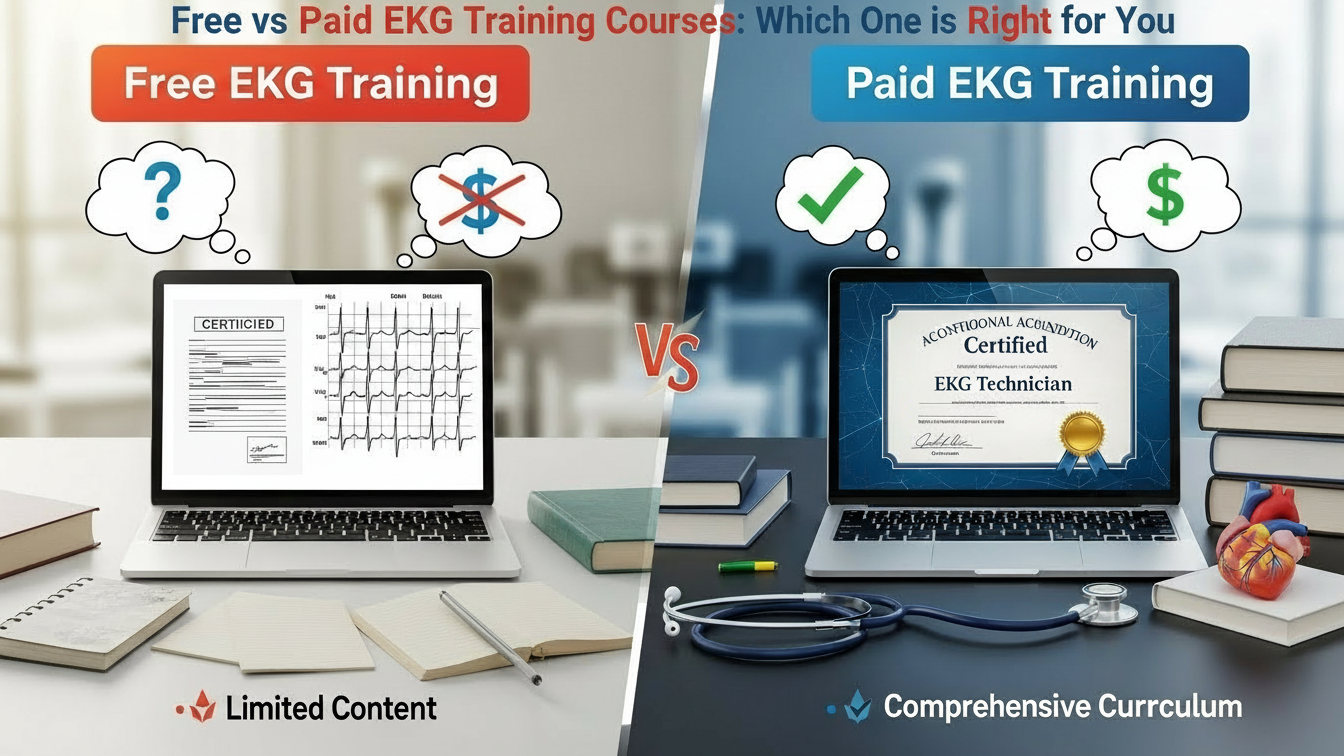
Cost Considerations
When deciding between free vs paid EKG training courses, cost is often a deciding factor. Free courses come with the obvious benefit of no financial investment, making them accessible to anyone. However, consider the long-term implications. Investing in a paid course might seem daunting, but it can pay off in the long run through better job opportunities and higher earning potential. Understanding PVC on EKG Strip: What You Need to Know
Moreover, some paid courses offer payment plans or financial aid options, making them more manageable for those on a tight budget. It’s essential to weigh the immediate cost against the potential benefits and opportunities that a more comprehensive program can provide.
Choosing the Right Course for You
Ultimately, the decision between free vs paid EKG training courses comes down to your personal goals and circumstances. If you’re unsure about pursuing a career in EKG technology, a free course can be an excellent starting point. It allows you to explore the field without any financial commitment.
However, if you’re serious about becoming an EKG technician and want to ensure you have the best possible training, a paid course might be the way to go. Consider your learning preferences, career aspirations, and financial situation when making your decision. Remember, investing in your education can yield significant returns in the future.
Conclusion
The choice between free vs paid EKG training courses is not straightforward. Both options have their merits and drawbacks, and your decision should align with your career goals and personal circumstances. Free courses can provide valuable introductory knowledge, while paid courses often offer comprehensive training, certification, and real-world experience.
Ultimately, the investment in your education can be a stepping stone to a fulfilling career as an EKG technician. By weighing the pros and cons of each option, you can make an informed choice that sets you up for success in the healthcare field.
FAQs
1. Are free EKG training courses worth it?
Yes, free EKG training courses can provide basic knowledge. However, they may not offer certification or in-depth training.
2. What benefits do paid EKG courses offer?
Paid courses often include certification, comprehensive training, hands-on experience, and access to support from instructors.
3. Can I get a job with a free EKG course?
While possible, it’s less likely. Most employers prefer candidates with accredited certifications from paid courses.
4. How long do EKG training courses typically take?
Free courses can vary widely, while paid courses usually take a few weeks to several months, depending on the program.
5. Is financial aid available for paid EKG courses?
Yes, many paid programs offer financial aid, payment plans, or scholarships to help manage costs.